
Richest Athlete in the World: Top 10 Wealthiest Sports Stars
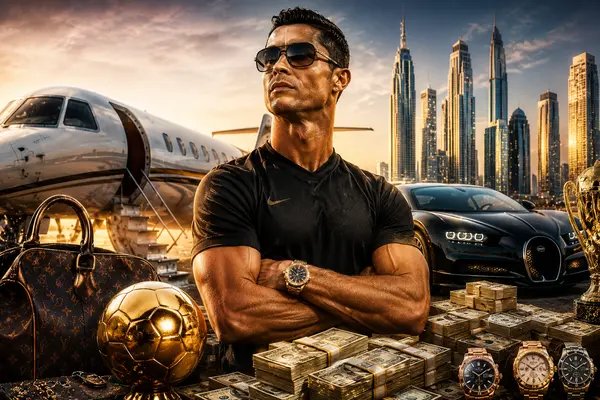
Elite sport creates some of the highest earners in entertainment, but the biggest salary does not necessarily produce the biggest fortune. The wealthiest athletes increasingly make their money outside competition through sponsorships, licensing agreements, investments, business ownership and equity in sports franchises.
This distinction makes sporting wealth more complicated than simply comparing contracts or prize money. Net worth, annual earnings and career earnings measure different things, while the largest fortunes are often accumulated over decades.
So, who is the richest athlete in the world, how was that wealth created, and how do today's biggest football, basketball and other sports stars compare?
Free Vip Tips
Who Is the Richest Athlete in the World in 2026?
Michael Jordan is the richest athlete in the world, with Forbes estimating his net worth at approximately $4.3 billion in 2026.
The figure is particularly remarkable because Jordan earned roughly $90 million in NBA salary during his playing career. His enormous fortune was instead built primarily through commercial partnerships, investments and sports ownership.
His relationship with Nike has been especially important. What began as an endorsement agreement developed into one of the most valuable athlete-brand relationships in sporting history, allowing Jordan to continue generating substantial income long after his retirement from basketball.
The sale of his majority stake in the Charlotte Hornets was another major contributor to his financial rise.
Jordan therefore represents something larger than a highly paid former athlete: he is one of the clearest examples of how sporting fame can be converted into long-term business value.
Who Are the Richest Athletes in the World?
Rankings of athlete wealth should be treated carefully because net worth is an estimate rather than an independently audited bank balance. Private companies, investments, property and other assets can make precise comparisons difficult.
Nevertheless, several sporting figures consistently appear among the world's wealthiest current and former athletes.
| Athlete | Sport | Estimated Wealth Level | Major Sources of Wealth |
|---|---|---|---|
| Michael Jordan | Basketball | $4B+ | Jordan Brand, Nike, investments, sports ownership |
| Ion Țiriac | Tennis | $2B+ | Business investments, real estate, automotive interests |
| Cristiano Ronaldo | Football | $1B+ | Football earnings, endorsements, CR7 businesses |
| Lionel Messi | Football | $1B+ | Football earnings, endorsements, commercial partnerships |
| LeBron James | Basketball | $1B+ | NBA earnings, endorsements, investments |
| Tiger Woods | Golf | $1B+ | Prize money, endorsements, business ventures |
| Magic Johnson | Basketball | $1B+ | Investments and business ownership |
The exact order below Jordan can vary depending on the methodology and valuation date. It is therefore more useful to treat these numbers as informed estimates rather than precise measures of how much money each athlete possesses.
What the comparison demonstrates more clearly is that building a billion-dollar fortune usually requires substantial financial success beyond salaries and prize money.
What Is Michael Jordan's Net Worth?
Michael Jordan's estimated net worth is approximately $4.3 billion.
His fortune is the result of several decades of wealth creation rather than one exceptionally large playing contract.
Jordan's financial history can broadly be divided into four areas:
- NBA career earnings;
- endorsement and licensing income;
- the Jordan Brand and Nike relationship;
- investments and sports ownership.
The difference between his playing salary and eventual net worth is particularly revealing. Basketball made Jordan wealthy, but his ability to turn his name into a global commercial asset pushed his fortune into an entirely different category.
How Did Michael Jordan Become So Rich?
Jordan's NBA career created the platform for his wealth. Six championships with the Chicago Bulls, five regular-season MVP awards and worldwide popularity made him one of the most recognizable athletes in history.
The decisive financial developments, however, came outside his NBA salary.
Nike and the Jordan Brand
Jordan signed with Nike early in his NBA career. The resulting Air Jordan line eventually expanded far beyond its origins as a signature basketball shoe.
Footwear, apparel and the wider Jordan Brand developed into a global business. Jordan's arrangement allowed him to benefit from the continued commercial success of products associated with his name.
This is fundamentally different from simply receiving a fixed sponsorship payment. The long-term value of the brand continued growing after Jordan stopped playing professionally.
Charlotte Hornets Ownership
Jordan also made the transition from playing professional basketball to owning part of an NBA organization.
He became majority owner of the Charlotte Hornets before selling his majority stake in 2023. The franchise had increased substantially in value during his ownership period, making the transaction an important contributor to his fortune.
Jordan retained a minority interest after the sale.
Endorsements and Other Investments
Nike is Jordan's best-known corporate relationship, but his commercial portfolio has included partnerships with other major brands, including Gatorade and Hanes.
He has also invested in businesses and sporting properties outside basketball, including involvement in NASCAR.
Together, royalties, endorsements and appreciating assets explain why Jordan's wealth continued increasing long after his NBA salary disappeared.
Is Cristiano Ronaldo the Richest Athlete in the World?
No. Cristiano Ronaldo is one of the richest athletes in history, but his estimated net worth remains below Michael Jordan's.
Ronaldo has nevertheless achieved something extremely rare: he has converted an elite football career into a global commercial brand.
His income has come from several major sources, including football contracts, endorsement agreements and businesses connected to the CR7 brand.
Ronaldo has also repeatedly ranked among the world's highest-paid athletes. That does not automatically make him the wealthiest, however, because annual income and accumulated net worth are different measurements.
An athlete can earn more than anyone else during a particular year while still possessing fewer total assets than a retired star who has spent decades building investments.
Who Is the Richest Footballer in the World?
Cristiano Ronaldo is generally considered the richest active footballer, with his accumulated career earnings, commercial partnerships and business interests helping him reach billionaire status.
Lionel Messi is his closest contemporary comparison. Like Ronaldo, Messi has earned enormous sums through football while developing major long-term endorsement relationships.
The financial profiles of both players demonstrate how football's biggest stars now operate as international brands. Their income is no longer tied exclusively to the clubs that employ them.
Sponsorships, licensing, property and private businesses can all contribute to a footballer's wealth. This makes the finances of modern superstars fundamentally different from those of players several generations ago, when wages represented a much larger proportion of an athlete's total economic opportunity.
Is Lionel Messi a Billionaire?
Lionel Messi has generated more than $1 billion in career earnings, placing him among the highest-earning athletes in sporting history. However, career earnings should not automatically be interpreted as personal net worth.
Messi's wealth has been built through elite playing contracts and major commercial relationships accumulated during a career at the highest level of football.
His global profile has allowed him to work with multinational brands, while contracts with Barcelona, Paris Saint-Germain and Inter Miami have contributed substantial playing income.
As with Ronaldo, the important point is that elite football provided the foundation rather than the complete financial picture. The wealthiest modern players increasingly combine sporting income with the economics of personal branding and investment.
Who Is the Highest-Paid Athlete in the World?
The highest-paid athlete is not necessarily the richest athlete.
Cristiano Ronaldo has occupied the top position in recent Forbes annual athlete earnings rankings, driven by his football contract and extensive off-field commercial income.
Annual earnings rankings generally examine money generated during a specific 12-month period. Net-worth estimates attempt to measure accumulated wealth after assets and liabilities are considered.
That distinction can produce very different rankings.
A retired athlete may earn considerably less during the current year but remain far wealthier because of investments accumulated over several decades. Conversely, an active athlete may sign an enormous contract and become the highest earner for that year without immediately becoming the richest athlete overall.
What Is the Difference Between Net Worth and Career Earnings?
Net worth and career earnings should never be treated as interchangeable figures.
Career earnings measure income generated during a particular period or from particular sources. Depending on the calculation, this might include salary, prize money and endorsements.
Net worth attempts to estimate the value of what a person owns after liabilities are taken into account.
An athlete who earns $500 million over a career does not automatically have a $500 million net worth. Taxes, agent fees, management costs and personal spending all reduce the amount retained.
Investments can move the figure in the opposite direction. If an athlete uses career income to purchase equity, property or businesses that subsequently appreciate, eventual net worth can significantly exceed the original playing income.
Statistics require context in almost every area of sports analysis. A headline salary does not reveal an athlete's total wealth, just as one isolated performance metric may not provide enough information for a reliable prediction today Understanding what the number actually measures is essential.
How Do Athletes Build Billion-Dollar Fortunes?
Reaching billionaire status through salary alone is extremely difficult, even for the highest-paid athletes.
The biggest fortunes usually emerge when sporting income is converted into ownership and scalable assets.
Several routes are particularly important.
- Endorsements allow athletes to monetize their public profile outside competition. Global stars can represent brands across multiple markets simultaneously.
- Royalties and licensing can be even more valuable because earnings are connected to product sales rather than a fixed promotional fee.
- Equity gives athletes ownership in companies. If the company increases dramatically in value, the athlete participates directly in that growth.
- Sports franchise ownership offers another path. Professional teams have become extremely valuable assets, and former athletes who acquire stakes can benefit from rising franchise valuations.
- Personal brands can also become independent businesses. Clothing, footwear, media, hospitality and other ventures allow an athlete's name to generate revenue beyond the original sporting career.
Jordan's financial history contains several of these elements, which helps explain why his fortune became so much larger than his NBA salary.
Which Sports Produce the Richest Athletes?
Basketball, football, golf and tennis have produced multiple exceptionally wealthy athletes, but no sport automatically creates billionaires.
Different sports offer different financial advantages.
Basketball has an unusually strong connection with footwear and apparel, creating opportunities for signature products and royalty agreements. Jordan is the most successful example, while LeBron James has also developed an extensive commercial portfolio.
Football provides enormous global reach. Players such as Ronaldo and Messi can attract sponsors across Europe, Asia, the Americas and the Middle East.
Golf and tennis offer another advantage: individual athletes are the primary sporting brands rather than members of a large team roster. Stars such as Tiger Woods can therefore build commercial identities that remain valuable for decades.
Ultimately, the most important factor is not simply the sport but what an athlete does with the commercial platform that sporting success provides.
Why Are Athlete Net Worth Estimates Different?
Readers may encounter significantly different figures when searching for the wealth of a famous athlete.
That does not necessarily mean one figure is intentionally misleading.
Net worth calculations can involve assets whose true values are not public. Private company stakes, investment portfolios, property holdings and contractual arrangements may all require estimation.
Asset values also change. A stake in a sports franchise could become substantially more valuable over several years, while the valuation of a private company may rise or fall.
There is another important distinction between gross career earnings and current wealth. Reports sometimes describe an athlete as having "earned $1 billion" even though this does not mean that athlete currently has a $1 billion net worth.
For this reason, credible comparisons should distinguish clearly between estimated wealth, annual income and lifetime career earnings.
What Makes the Richest Athletes So Wealthy?
Exceptional sporting ability creates earning power, but the largest athlete fortunes are usually built through what happens to that income after it has been earned.
Michael Jordan remains the clearest example of this model. His playing career established the value of his name, but Nike royalties, endorsements, investments and sports ownership multiplied that value long after his final NBA game. Ronaldo, Messi and LeBron James have followed similar paths by developing commercial interests and investment portfolios alongside their sporting careers.
That is why the richest athlete in the world is not necessarily the athlete with the largest contract or the highest annual salary. Long-term wealth depends on whether sporting income is simply spent or converted into brands, businesses, equity and other assets that can continue growing in value.
More Blog Posts
William Zepeda's 884-Pu...
Zepeda's 12-round win over Lamont R...

From 1.60 xG to 2.04 Fa...
Using hypothetical xG estimates of ...

Football Bankroll Manag...
Build a football betting bankroll w...
Richest Athlete in the ...
Who is the richest athlete in the w...

Best Football Betting A...
Compare football betting apps by od...
How to Choose Between C...
Learn how to choose between cashbac...

Knattspyrnufélag Reykj...
Learn about KR ReykjavÃk, Iceland'...
Don't Leave Free Money ...
Discover how Nigerian bettors can m...

West African Transfer M...
West African Football Transfer News...
888bet Kenya and the Pr...
Kenya's 2026/27 Premier League seas...

How Sportsbooks Are Pri...
Topuria sits as a heavy favorite ov...

Fonctionnement des pari...
La Coupe du Monde 2026 a un nouveau...